








In the world of international machinery trading, few topics create more confusion—and more unexpected obstacles—than CE certification. Whether you’re buying or selling used construction equipment within the European Union, understanding CE requirements is absolutely essential. Without proper certification, even a perfectly functioning machine can end up stuck at a port, blocked from operation, or costing far more than expected to bring into compliance.
What Exactly Is CE Certification?
The CE mark is the European Union’s declaration that a product meets all applicable safety, health, and environmental protection requirements. For construction machinery, this includes directives covering emissions, noise limits, electrics, hydraulics, machine safety, and operator protection systems.
In practice, a CE-marked machine is approved for legal use anywhere in the EU. But when it comes to used machinery—especially equipment originally built for non-European markets—the situation becomes far trickier.
Why Used Machines Still Need CE Certification
One common misconception is that CE certification only applies to new machines. In reality, any machine sold, imported, or operated within the EU must comply, regardless of age. This means a 10-year-old loader or excavator coming from the U.S. or Asia must meet the same standards as a new machine.
If it doesn’t, buyers and sellers may face:
- Delays at borders or ports
- Prohibition of use within the EU
- Costly modifications to achieve compliance
- Lost deals if a buyer discovers non-compliance too late
For businesses that trade internationally, overlooking CE certification can turn a promising purchase into an expensive mistake.
Common Issues With Non-CE Machinery
Machines built for markets like North America or certain parts of Asia often differ in several ways from EU-spec units. Typical problems include:
- Engines not meeting EU emission standards
- Missing safety guards or emergency stop features
- Incorrect or missing warning labels
- Cab safety systems (like ROPS/FOPS) not certified to EU requirements
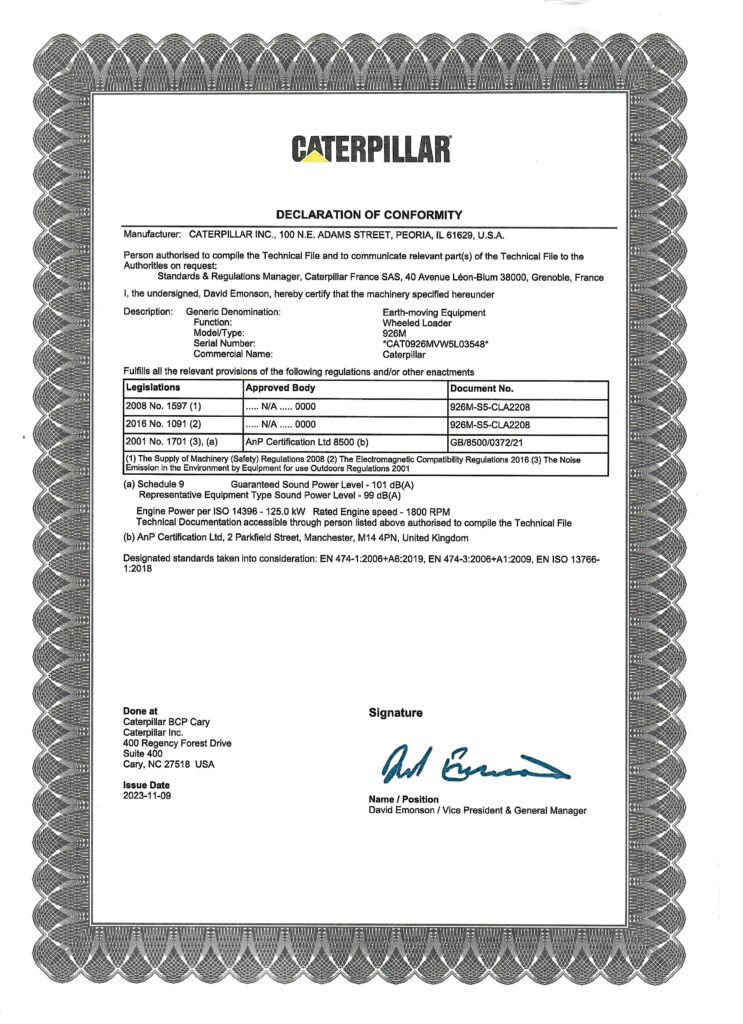
- Lack of a “Declaration of Conformity” — the legal document proving CE compliance
Even when the machine is mechanically sound, these gaps can make it illegal to operate in Europe.
Can You Add CE Certification Later?
Yes—but it can be complicated. The process for CE marking a used non-compliant machine typically involves:
- A full technical inspection
- Identifying gaps between the machine’s current state and EU requirements
- Retrofitting missing safety features
- Emissions compliance verification
- Rebuilding technical documentation and labeling
This can be costly, sometimes exceeding the value of the machine itself. For that reason, buyers should verify CE status before committing to a purchase.
Best Practices for Buyers and Sellers
To avoid unexpected expenses and delays:
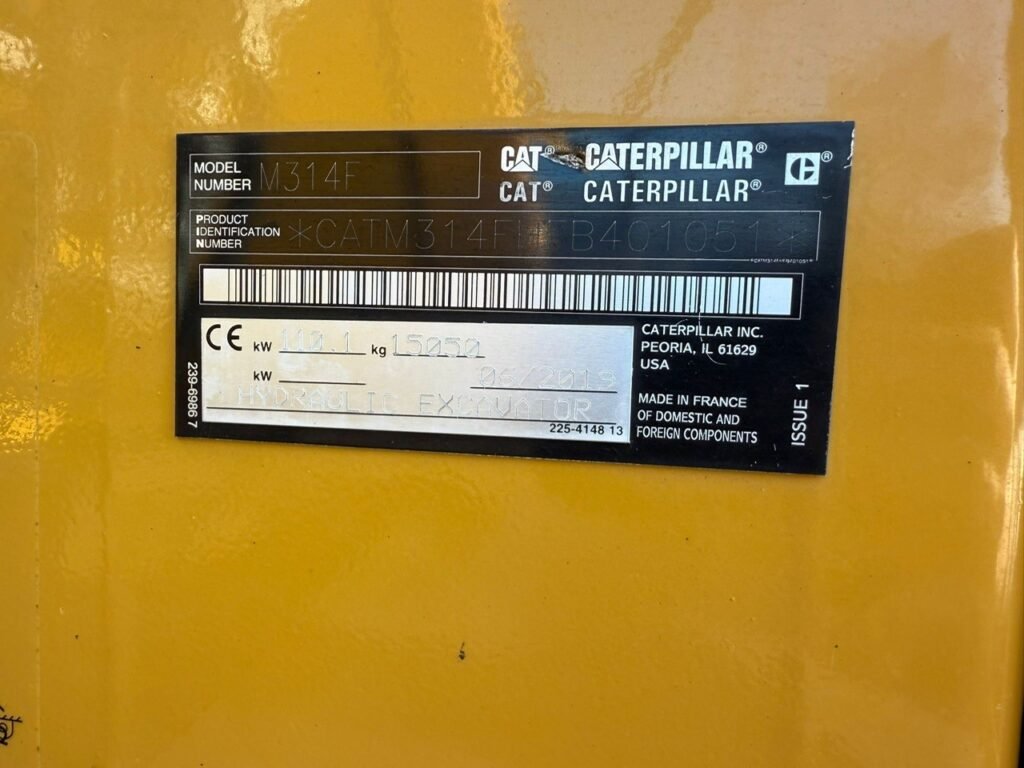
- Request proof of CE certification early, including photos of the CE plate and the Declaration of Conformity.
- Check the machine’s original market. If it wasn’t built for Europe, assume extra steps may be needed.
- Use an inspector to verify compliance in person.
- Work with knowledgeable logistics partners who understand EU regulatory checks.
Final Thoughts
CE certification isn’t just a formality—it’s a legal requirement that ensures safety and environmental compliance across Europe. For used construction machinery, verifying CE status early is one of the smartest decisions you can make. In a market where margins matter and downtime is costly, understanding CE requirements helps avoid surprises and keeps international deals running smoothly.